Field Record Est. 2016

We built it before we sold it.

460 square feet. 165 two-by-fours. A latex concrete shell. Nine central-Texas summers, and counting. This is the structure every kit we sell is descended from.

The proof dome in the Texas snowstormstill standing
SHT 05

The story

Starting in the summer of 2016, our founder built a 24-foot geodesic dome outside Bryan–College Station, Texas, using PVC disc-and-socket hubs from a small company that has since disappeared from the market.

The frame was ordinary 2×4 lumber. The shell was latex-modified concrete over fabric — the lightweight shell method documented by Knott and Nez in Latex Concrete Habitat (2005), a technique with real engineering pedigree, used in disaster recovery work as far afield as Afghanistan.

Then the company that made the hubs vanished. For years, anyone who wanted to build a full-size lumber-strut dome had a choice between thin single-tab kits and five-figure engineered packages. The best joint design on the market simply wasn't for sale.

The dome is still in daily use today — it's the founder's backyard theater room. Nine years of service, and the maintenance log is one line long: repainting, and the basics. Nothing structural, ever.

So we put it back into production — the PVC disc-and-socket hub, rebuilt to the original construction method, plus two heavy steel systems designed around the same principle: seat the strut and give every load a dedicated path.
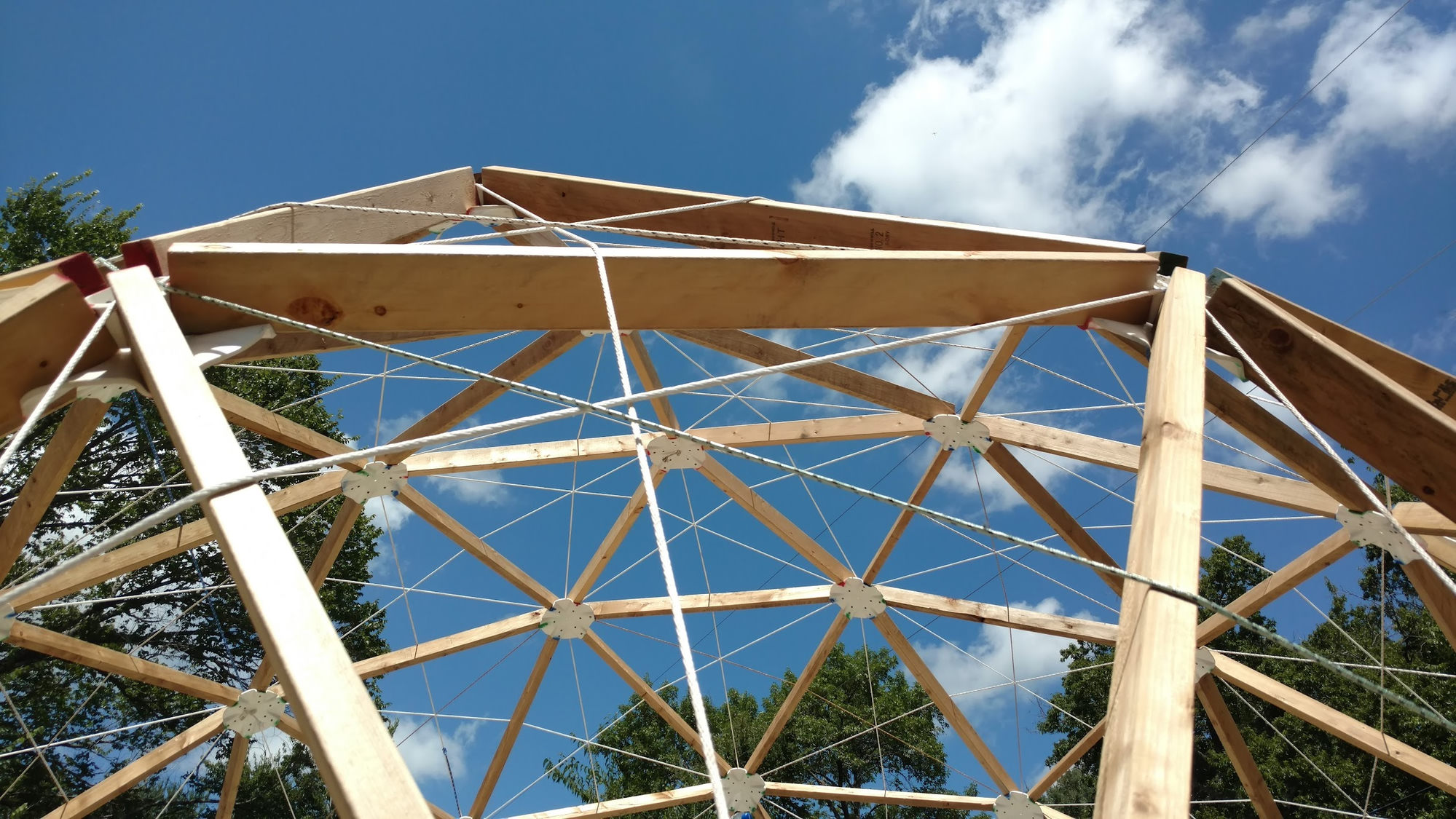
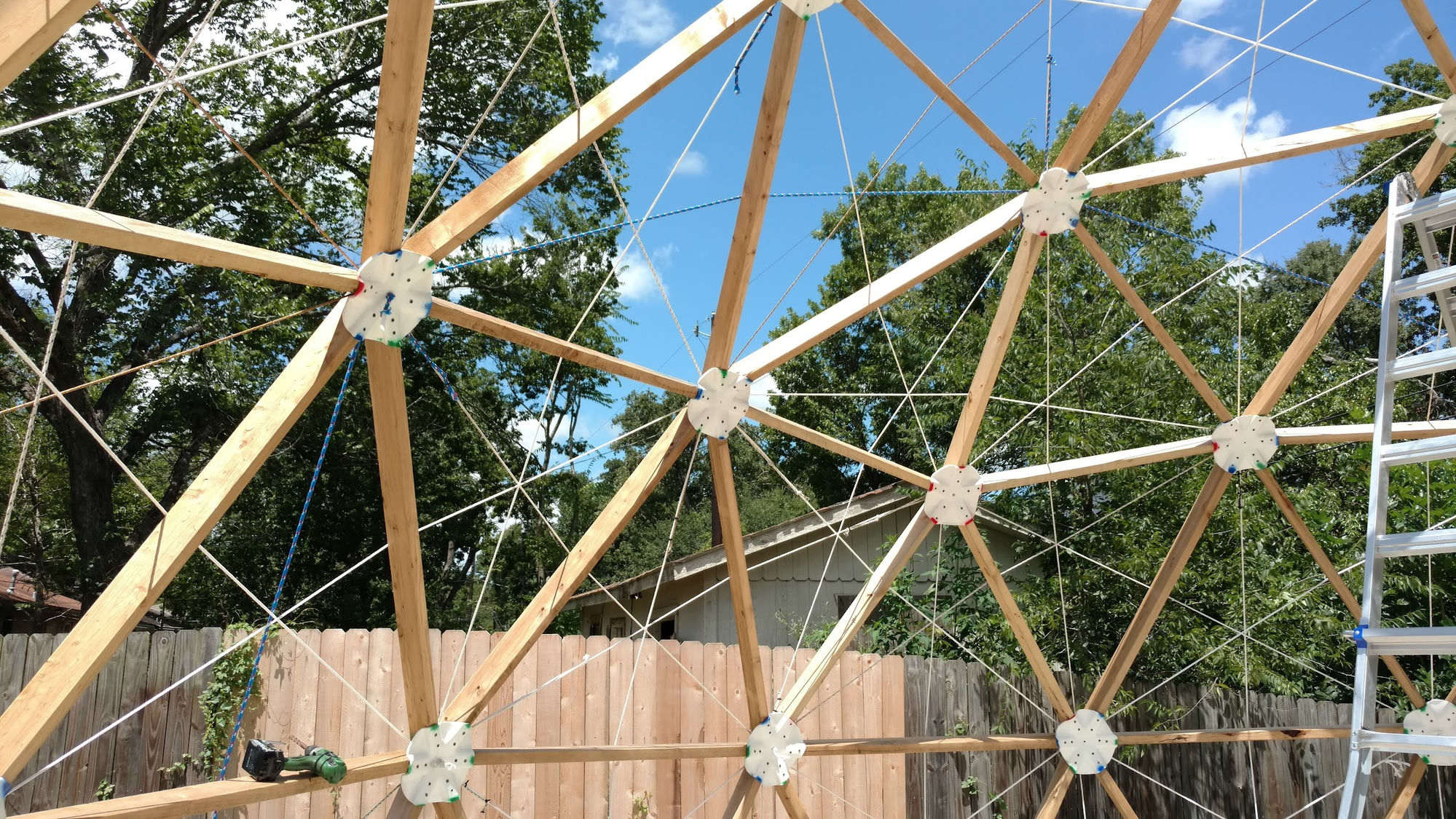
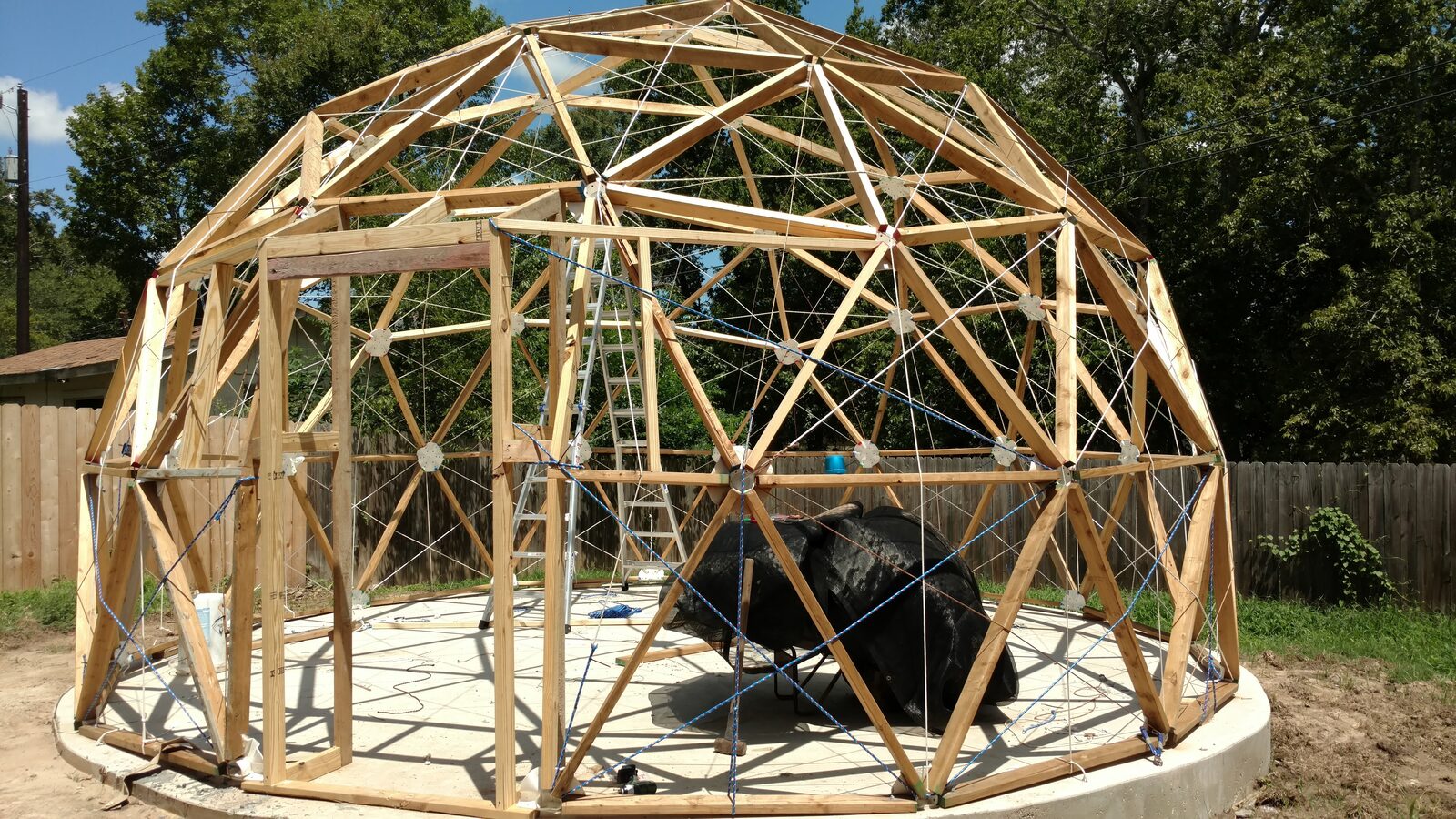
Looking up through the freshly raised 2x4 dome frame, rope rigging still in place
Frame up, rigging still on — Aug 2016
Hubs across the frame interior, color-coded strut ends at each disc
The original disc hubs, color codes visible
[ PHOTO — interior of the dome, light through the apex, showing usable volume. ]
SHT 05.1

The 400 lb test

Mid-build, we hung a dead load of 400 pounds from a single strut at mid-span — roughly the worst thing a careless roofing crew could do to one member. The joint at each end held without visible distress. Not a laboratory result, not a certification — a field test on a real structure, which is exactly the kind of evidence an owner-builder can evaluate for themselves.

Read this part

We publish this as information, not as an engineering claim. Our kits are connector hardware for agricultural, greenhouse, and glamping structures. If your project needs stamped engineering, hire an engineer — and show them our DXFs; we'll send them.

[ VIDEO — archival clip or re-enactment of the single-strut load test, weight visible hanging from mid-span. ]
SHT 05.2

Timeline

  • Summer 2016

    The frame goes up. 24 ft of 2×4s on original disc-and-socket hubs — kit unboxed in July, frame standing in August.

  • 2016

    400 lb single-strut load test during construction. Holds.

  • 2016–17

    Latex concrete shell. Fabric and polymer-modified concrete over the frame, finished with door, walkway, and cupola by 2017.

  • ~2018

    The original hub company disappears. No successor. The best joint on the market goes extinct.

  • 2016–today

    Nine years of Texas. 100°+ summers, hail, wind, and one memorable snowstorm — playing on loop above, worn like a hat. Total maintenance: repainting and basics. Nothing structural, ever.

  • Today

    Still in daily use — as the founder's backyard theater room. Movie nights inside the proof.

  • 2025

    Vertex Dome Works founded. The PVC disc-and-socket design is reverse-engineered from the proof dome's own hubs; the steel plate-hub and strap+ring systems are designed and prototyped with a 30-year machinist.

  • 2026

    Kits ship. You're reading the result.

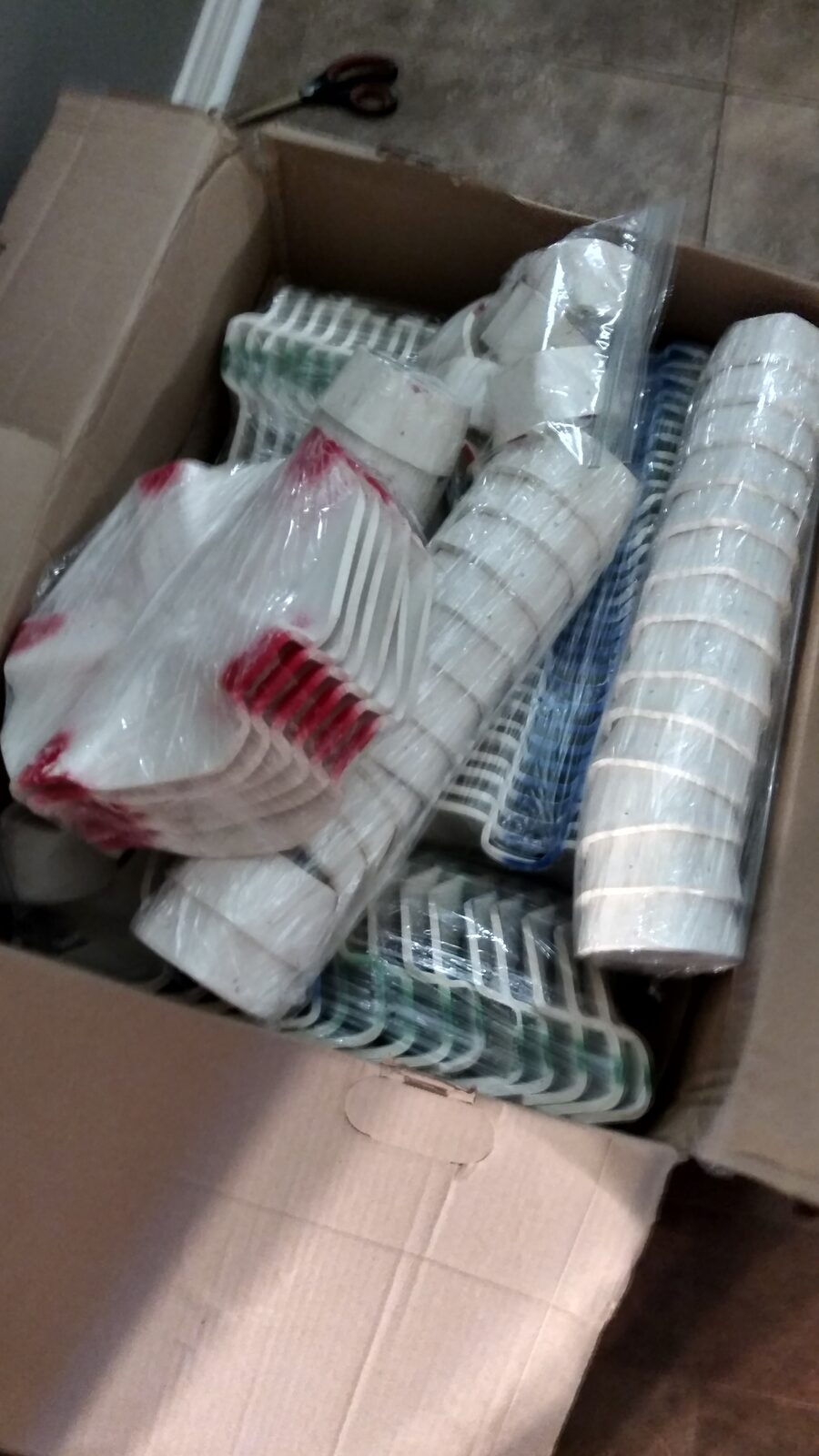
The hub kit arriving in its box
Kit arrives — Jul 2016
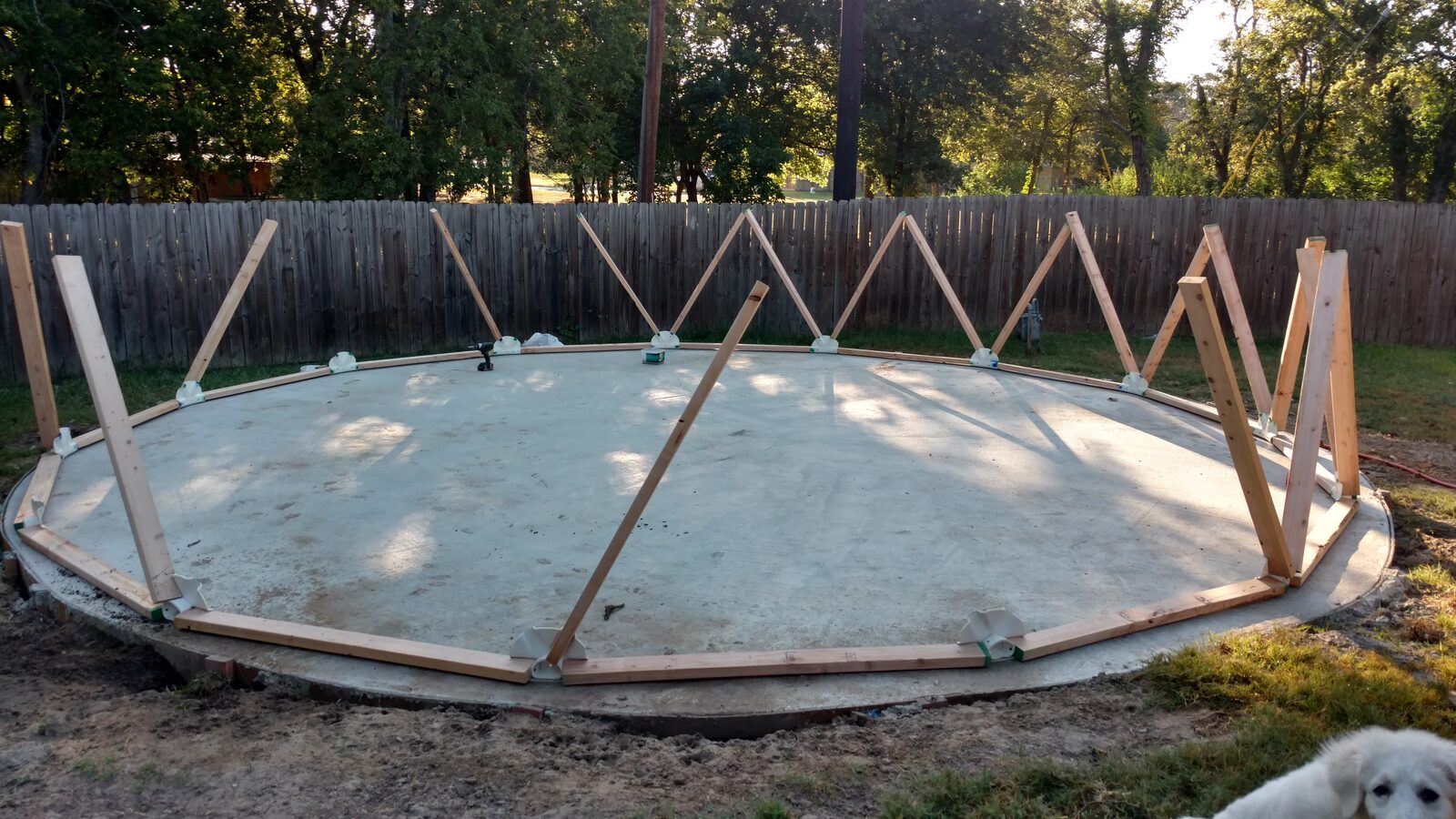
Ground pad and base ring laid out on the site
Site & base ring — Aug 2016
Dome frame half assembled, supervised by the dog
Frame rising — Aug 2016
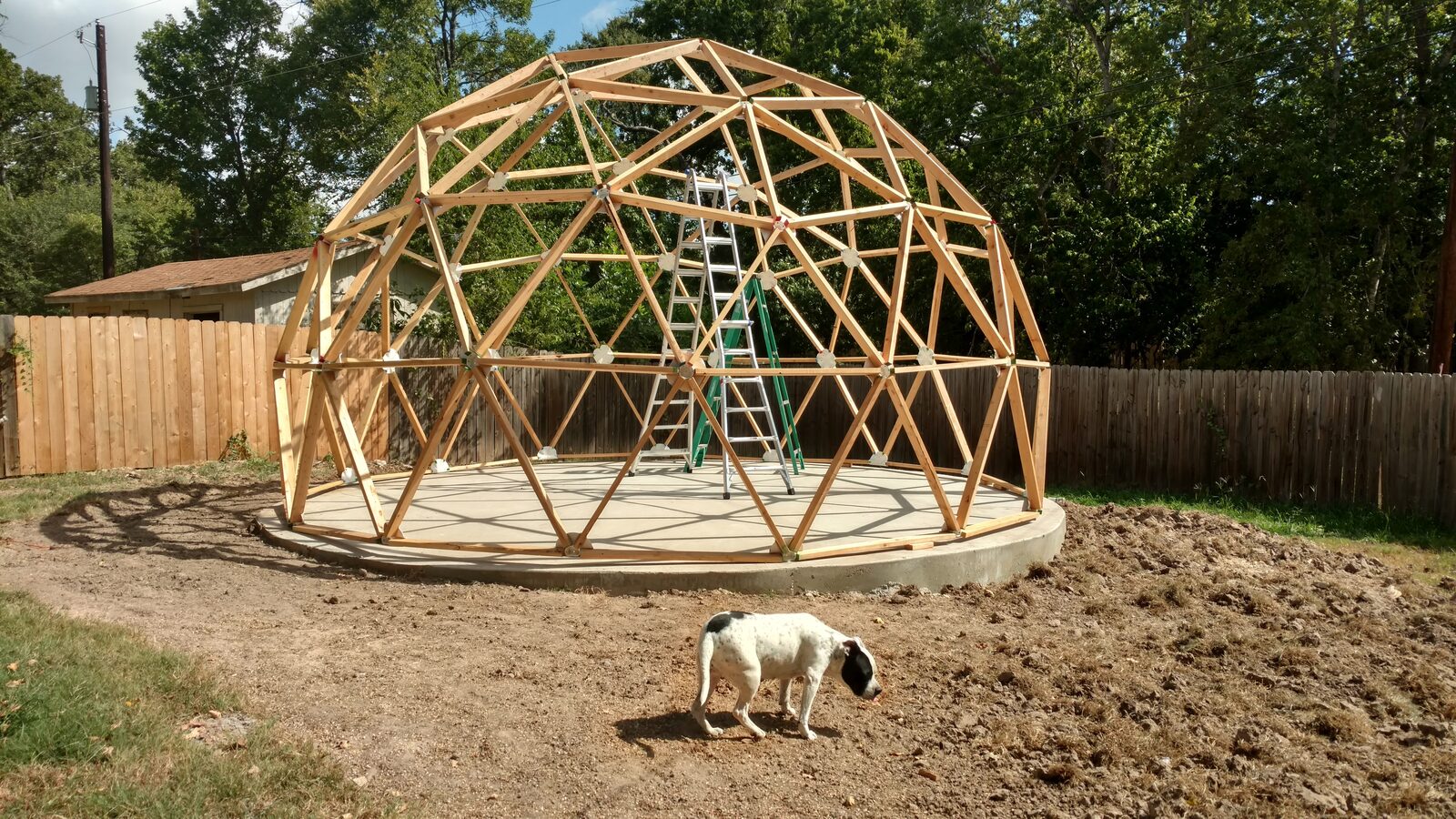
Completed 2x4 dome frame in the backyard
Frame complete — Aug 2016
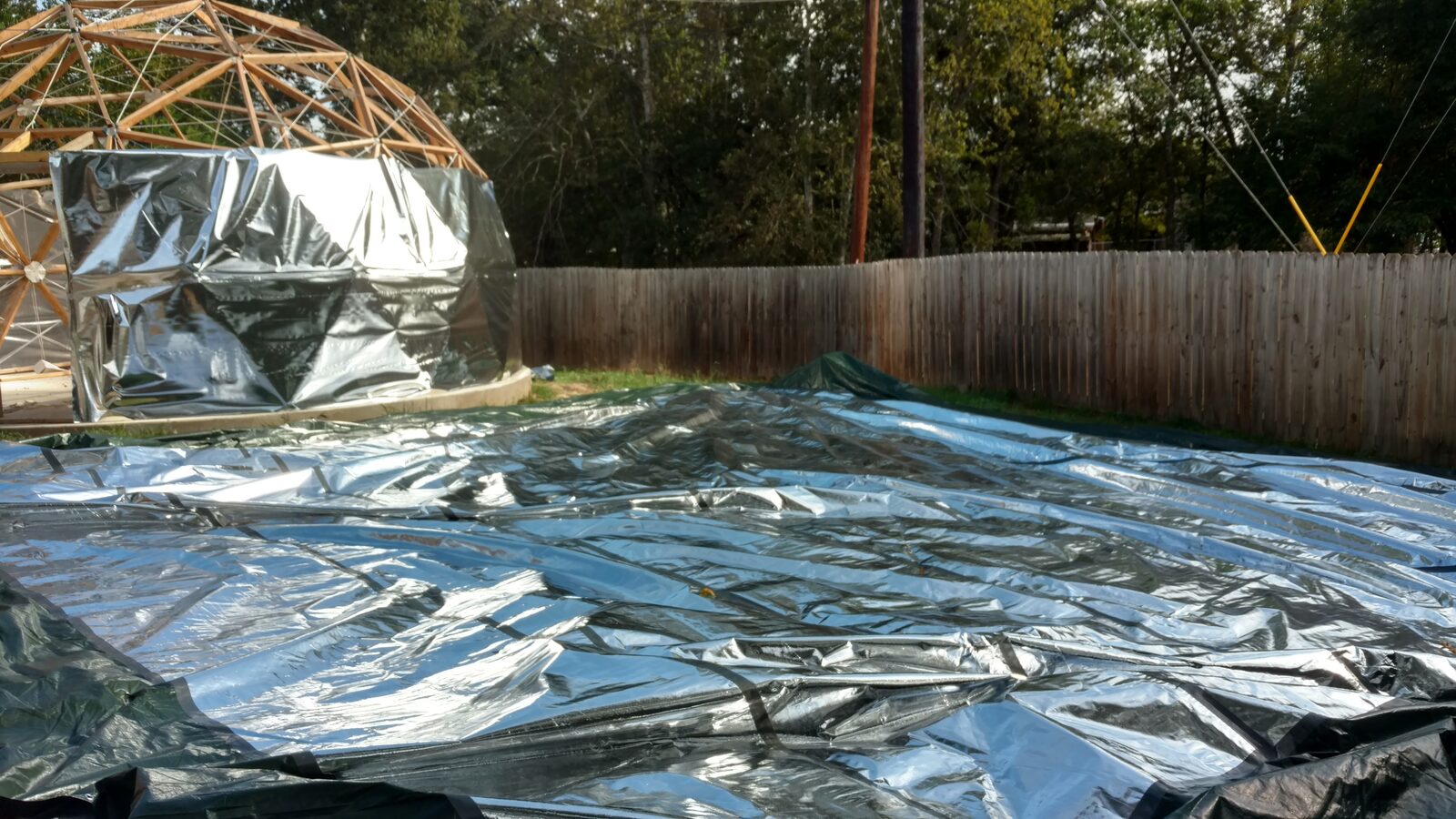
Latex concrete shell fabric work in progress
Shell going on — Sep 2016
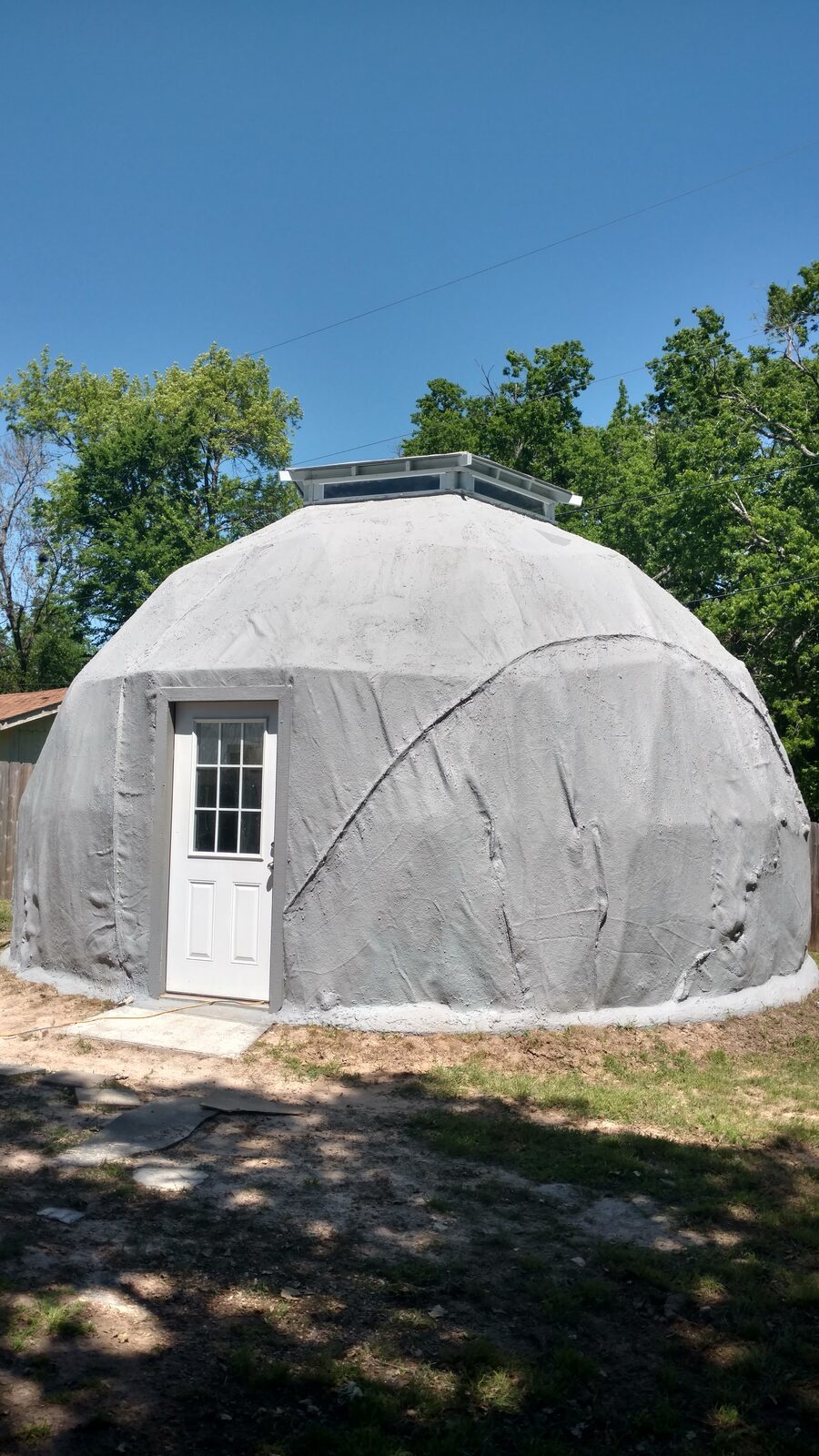
Fully shelled dome with door installed
Shell complete — Spring 2017
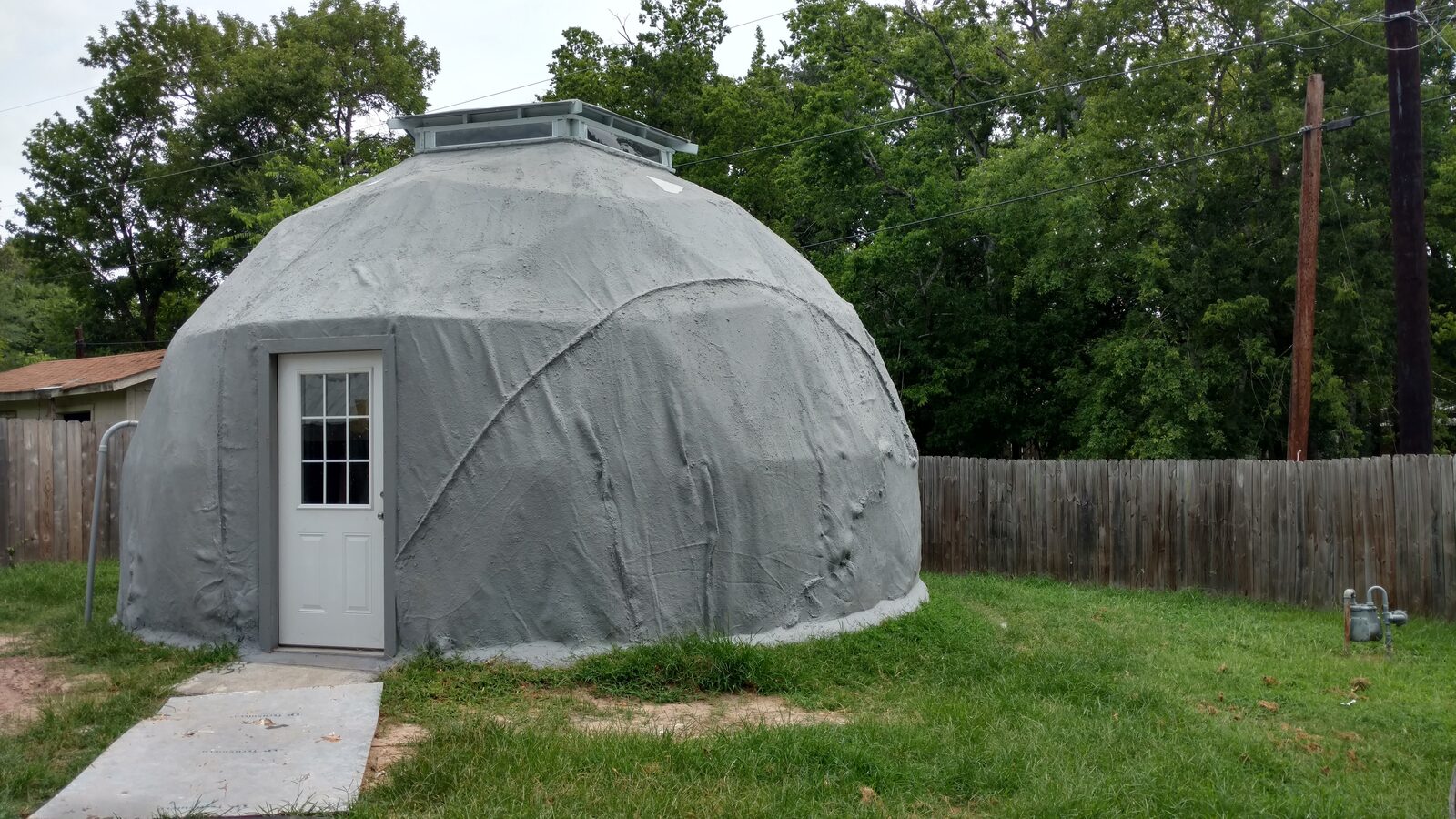
Finished dome with white door, walkway, and cupola
Door & walkway — Jun 2017
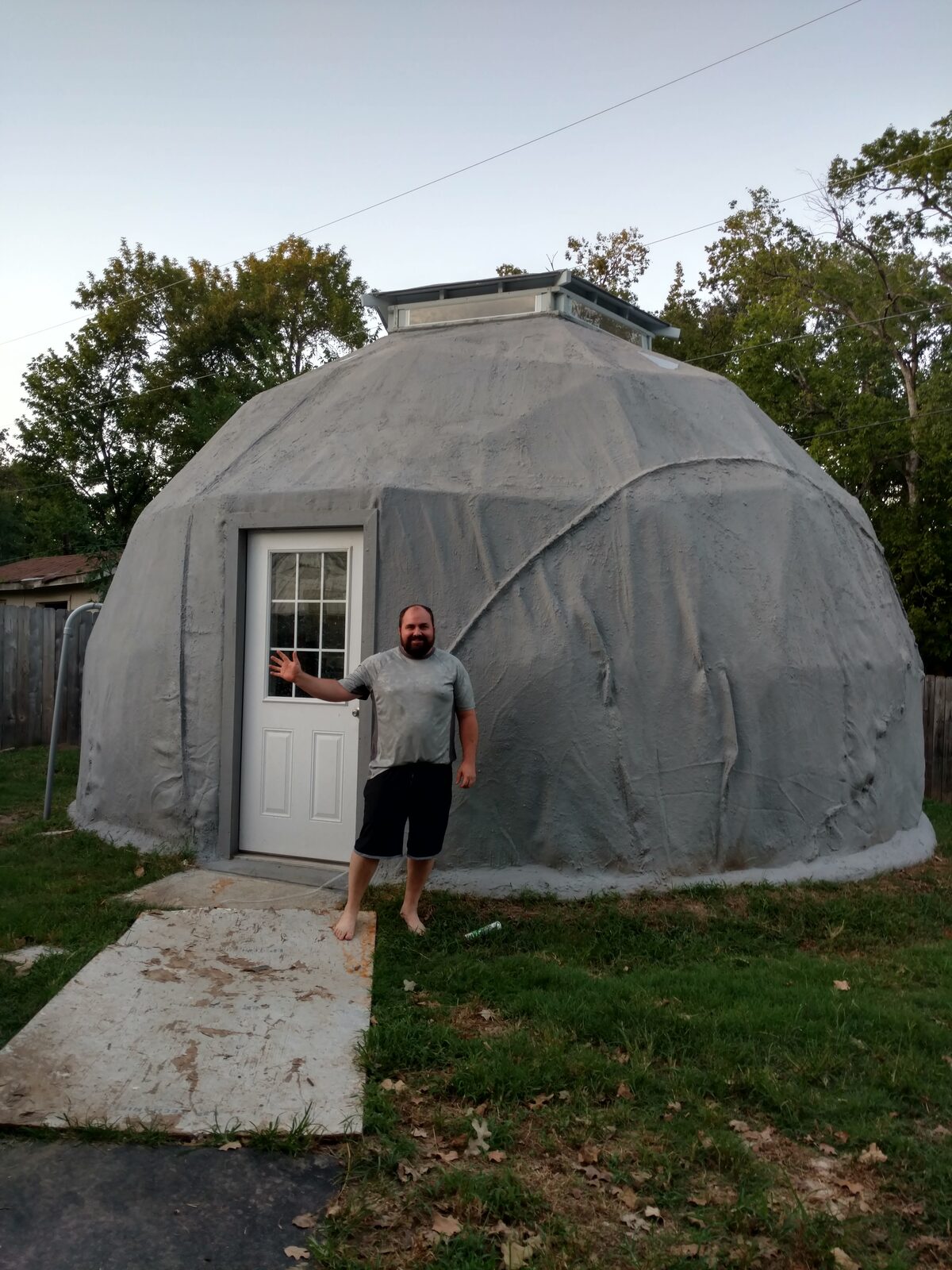
Person standing at the dome door at dusk for scale
Evening, person for scale — Sep 2017

The shell method, if you want it

The proof dome's shell is latex-modified concrete over fabric — light, cheap, and documented in engineering detail in Latex Concrete Habitat by Albert Knott & George Nez (Trafford, 2005, ISBN 9781412039970). Knott spent 40 years in structural failure analysis; Nez pioneered lightweight latex shells for relief housing.

A 3V kit frame plus that book is a complete owner-builder path to a serious structure for $5,000–10,000 in total materials. We don't sell the book or the concrete — we just point at the dome.

[ PHOTO — book cover of Latex Concrete Habitat next to a trowel and a fabric swatch on the workbench. ]

Build the next one.